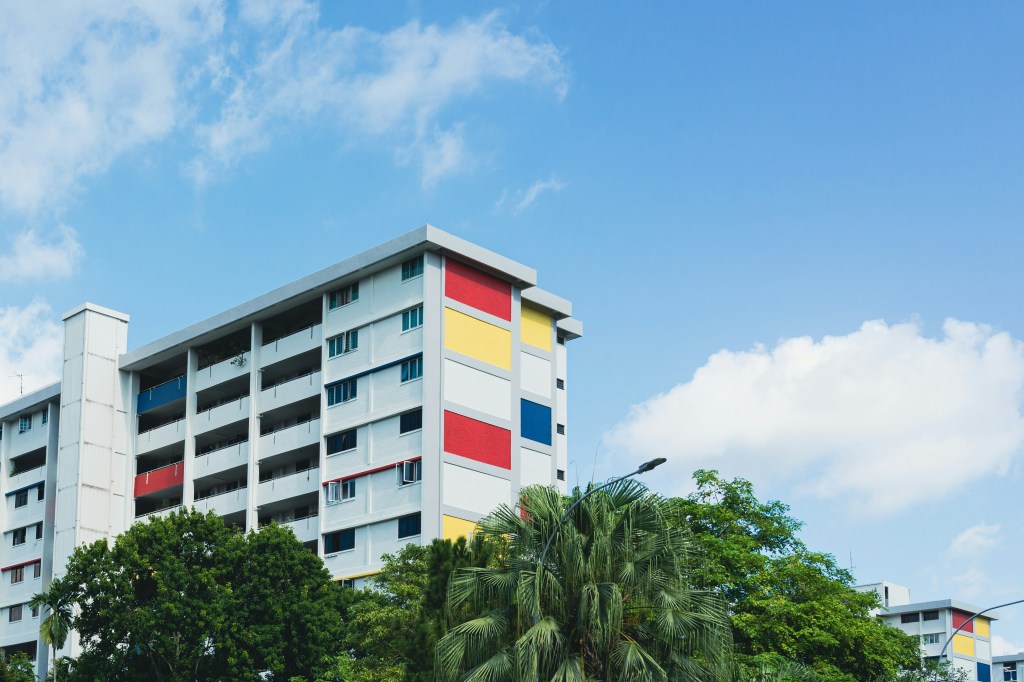
El Nuevo Día, the leading newspaper in Puerto Rico, recently published a call for public comments on a new rule from the United States Department of Housing and Urban Development (HUD) that proposes time limits in government housing. The newspaper recommended submitting the comments in English, as it’s HUD’s working language, or using a translation tool such as Google Translate or DeepL.
Puerto Rico is subject to federal decisions that directly impact its population. Yet most of the island’s residents can’t fully participate in public discussions, offer opinions on regulations, or access information without relying on translators, consultants, lawyers, or government officials, simply because they don’t have a command of English.
The problem isn’t the Spanish language itself, but rather the Puerto Rican public school system’s inability to educate bilingual citizens. That’s not about a lack of resources or exposure to the U.S. After more than a century of political association with the U.S., its influence is undeniable. The true problem lies in the politicization of the English language on the island.
For decades, Puerto Rico has treated English as an ideological symbol—whether viewed as a colonial imposition, a cultural threat, or an aspiration toward statehood—rather than embracing it as the operational language of the federal power that determines policy on housing, healthcare, education, and public funding.
The contrast between Puerto Rico and other U.S. territories is revealing. In Guam, the Virgin Islands, American Samoa, and the Northern Mariana Islands, English is the official language, even though native languages remain part of daily life.
I regularly read newspapers from Guam and the Virgin Islands to compare their political situations with Puerto Rico’s because I’m bilingual. While the other territories face similar challenges, I don’t perceive the same significant misunderstandings with Washington that plague Puerto Rico. Their populations can engage directly with the federal system.
In 2024, the American Community Survey (ACS) found that only 22% of Puerto Rico’s residents speak English “very well.” The politicization of education is backfiring on the Puerto Rican people heavily—particularly during times of crisis—and its repercussions are even impacting the economy.
English is the predominant language in science, technology, diplomacy, and the global economy. A large portion of scientific and technical knowledge is in English.
Spanish also generates knowledge, but English currently serves as the primary medium for global dissemination. I enjoy the enormous advantage of accessing knowledge directly from the primary source—in English or Spanish—without the need for intermediation.
Most Puerto Ricans who move to the mainland face barriers similar to those of newly arrived immigrants—despite being U.S. citizens by birth—because Puerto Rico failed to prepare them adequately. Residents of other territories don’t face the same difficulties.
Puerto Rico’s government has historically implemented bilingual education projects as pilot programs, yet they lack continuity whenever the administration changes. Consequently, the funding allocated for them—which is almost invariably federal—ends up being spent in vain. Puerto Rico’s political class has operated under the assumption that the flow of money from Washington will be permanent.
I submitted a comment stating that the new rule will increase the administrative burden on housing agencies nationwide. A constant turnover of tenants would increase the workload associated with screening and placing new residents, including new home inspections and maintenance.
However, it’s up to the residents of Puerto Rico—along with the staff of the local Department of Housing—to articulate specifically how this measure would affect their situation, as I neither reside there nor can I speak on their behalf.
 Internal Frontiers
Leave a comment