We can explain Donald Trump’s electoral victory by internal factors within the United States—particularly the economy, immigration, and the perception that the government had lost control over certain issues.
Although several economic indicators were strong, many voters felt that the cost of living—including food, housing, and insurance—had risen too sharply. Compounding this was a growing distrust of the political establishment in Washington.
Against this backdrop, immigration ultimately emerged as one of the most influential issues in both public opinion and the election campaign.
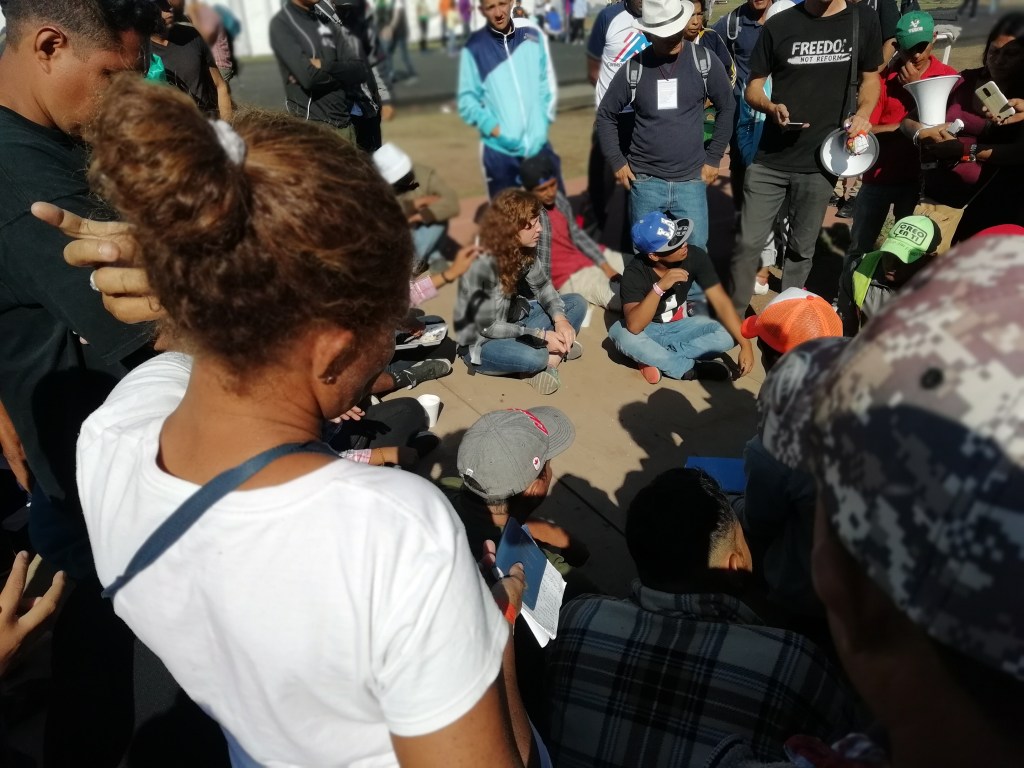
During Biden’s presidency, the U.S. faced one of the largest migratory flows in its recent history. Migration surged across the entire hemisphere for a multitude of reasons—for instance, the economic and political crises in Venezuela, Cuba, Nicaragua, and Haiti; the social fallout from the pandemic; and human trafficking networks that incentivized the journey northward.
Biden attempted to manage the situation through various measures, such as a conditional entry program (humanitarian parole) for nationals if migrants had a sponsor with sufficient income.
Additionally, the government established cooperative agreements with Mexico and other nations and developed the CBP One mobile app to facilitate scheduling immigration appointments from abroad.
However, the humanitarian parole program encountered difficulties. In 2024, the administration temporarily suspended new applications after detecting thousands of fraudulent sponsors who were using fake Social Security numbers, duplicate identities, or organized networks to submit multiple cases.
Although the objective of the humanitarian parole was to facilitate legal arrival and reduce illegal border crossings, the suspension fueled political criticism and reinforced—among many voters—the notion that migrants were exploiting the immigration system and that the government had lost control over the process.
The media and social networks also shaped public perception by what people frequently saw. Videos depicting large groups crossing the border circulated widely, and several U.S. cities reported that their shelter systems were under severe strain.
Cities such as New York, Chicago, Boston, Philadelphia, and El Paso declared states of emergency in response to the surge in migrants requiring housing and social services.
Furthermore, some governors of conservative border states deliberately sent buses carrying migrants to Democratic cities, making the issue more visible and polarizing across the country.
Another influential factor was the media’s impact on certain crimes committed by recent arrivals. Each of these cases received extensive coverage on TV and social media.
Although various studies in the U.S. have found that migrants commit fewer crimes than native-born citizens, media coverage of a few individual cases had a powerful political effect.
The combination of images of mass border crossings, the strain placed on cities, sponsor fraud within the humanitarian parole, intense coverage of specific crimes, and increasingly extremist political rhetoric created a sense that the border was out of control.
That sentiment—rather than any single specific policy—helped transform immigration into one of the central issues of the election. In this climate, candidates who promised tougher border measures gained a political advantage, contributing to Trump’s return to power.
In conclusion, many Americans were already grappling with tensions stemming from perceptions regarding the handling of the economy and inflation during the Biden presidency.
And human trafficking networks—which promised a better life in the North—inadvertently contributed to Trump’s victory.
Worse still, many migrants were unable to adjust their status before the beginning of Trump’s new term and faced deportation subsequently. Amidst this climate of hysteria, ICE has also detained U.S. citizens.
 Internal Frontiers
Leave a comment